



Cedar Sourcing and the Environment
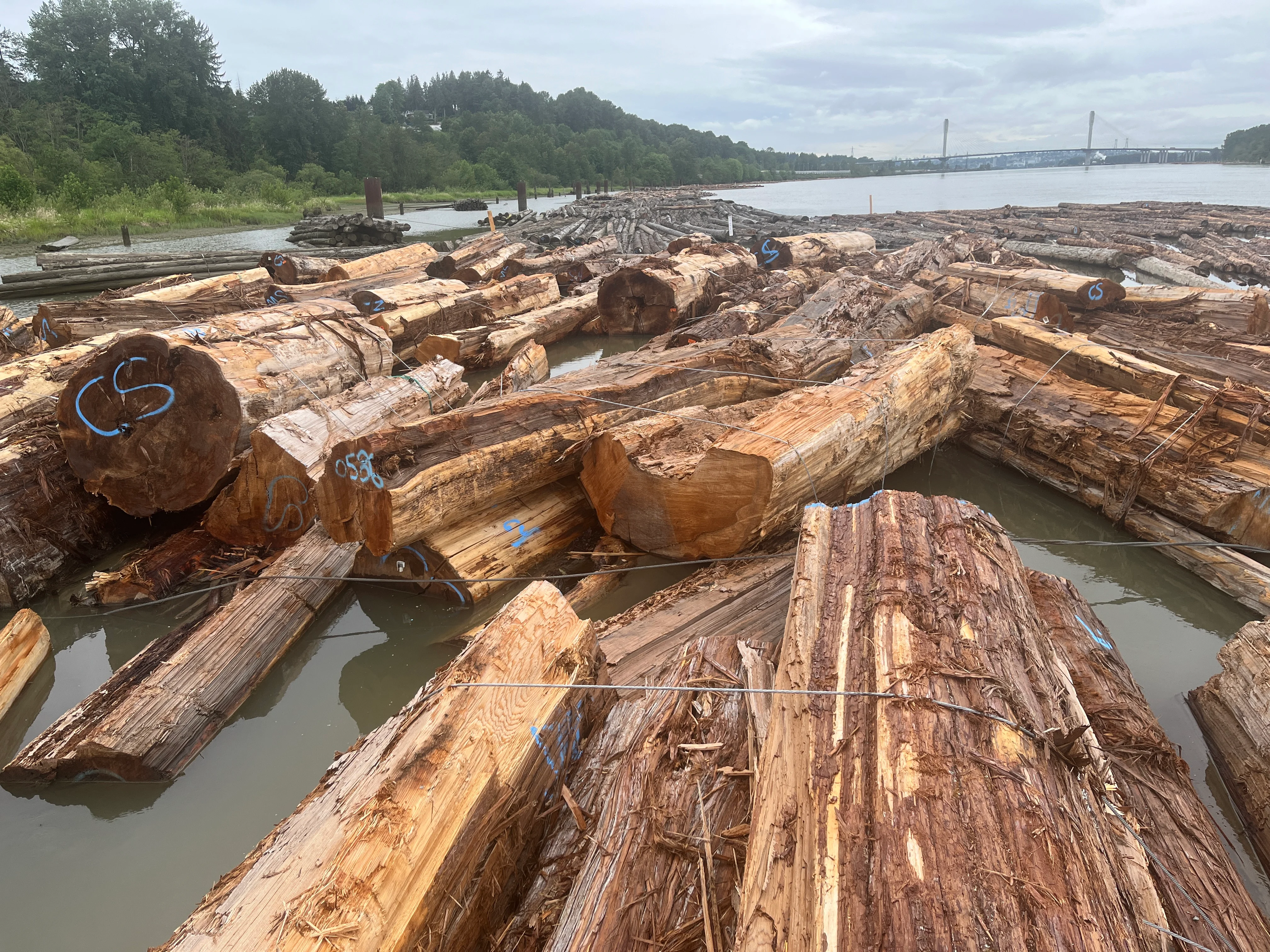
Western red cedar grows in the coastal and inland rainforests of British Columbia and the U.S. Pacific Northwest, and most of the western red cedar sold in North America comes from British Columbia. The photos on this page follow a high-grade cedar log cut from the log boom to the mill to the finished timber.
The log boom
Certified, replanted forests
Forests in Canada and the United States are regulated, and in British Columbia harvested land must be reforested by law. According to the Western Red Cedar Lumber Association, less than 0.5% of B.C.'s forests are harvested in a year, about 200 million seedlings are planted there every year, and more than 85% of B.C. timberland is certified by independent third parties: the Canadian Standards Association (CSA), the Sustainable Forestry Initiative (SFI) and the Forest Stewardship Council (FSC).
Read more from the association: Forestry facts and Real Cedar certification.
At the sawmill
Drying the lumber
At the remanufacturing plant
The environmental case for cedar
Wood stores the carbon the tree took in while it grew, and it takes far less energy to make than steel or concrete. Cedar adds a second advantage: its heartwood resists rot and insects by nature, so it lasts outdoors without chemical treatment.
The Western Red Cedar Lumber Association publishes Environmental Product Declarations, independently verified life-cycle numbers, for cedar lumber, cedar siding and cedar decking.
Further reading
- Sustainability and the environment (Real Cedar)
- Forestry facts (Real Cedar)
- Forest certification (Real Cedar)
- Characteristics and properties of western red cedar (Real Cedar)
- Cedar siding grades (Real Cedar)
- Traditional cedar saunas (Real Cedar)